










What Is Demi-Fine Jewelry?
Demi-fine jewelry is one of the most useful terms in modern jewelry, but also one of the least clearly defined.
You may see it used to describe gold vermeil hoops, sterling silver rings, lab-grown diamond pieces, or accessible solid gold jewelry. Sometimes it means “better than fashion jewelry.” Sometimes it means “not quite traditional fine jewelry.” Sometimes it is used so broadly that it starts to mean almost nothing at all.
That is the problem.
Unlike legal material terms such as “sterling silver” or regulated descriptions such as “vermeil”, demi-fine jewelry is not a single legally defined material category. It is more of a market category. It describes jewelry that sits between traditional fine jewelry and lower-priced fashion jewelry.
At its best, demi-fine jewelry offers a smarter middle ground: better materials, more thoughtful construction, and more accessible pricing. At its worst, it becomes a vague marketing phrase used to make ordinary plated jewelry sound more luxurious than it really is.
So the real question is not only “What is demi-fine jewelry?” The better question is: what should demi-fine jewelry be made from, and how can you tell whether it is actually worth buying?
The simplest definition of demi-fine jewelry
Demi-fine jewelry sits between fine jewelry and fashion jewelry.
Fine jewelry is traditionally associated with precious metals and gemstones: solid gold, platinum, diamonds, sapphires, emeralds, rubies, and other valuable materials. These are pieces often designed for long-term wear, repair, and sometimes heirloom use.
Fashion jewelry, on the other hand, is usually made from low-cost base metals, synthetic stones, coatings, and trend-led designs. It can be fun and expressive, but it is not usually made for long-term durability.
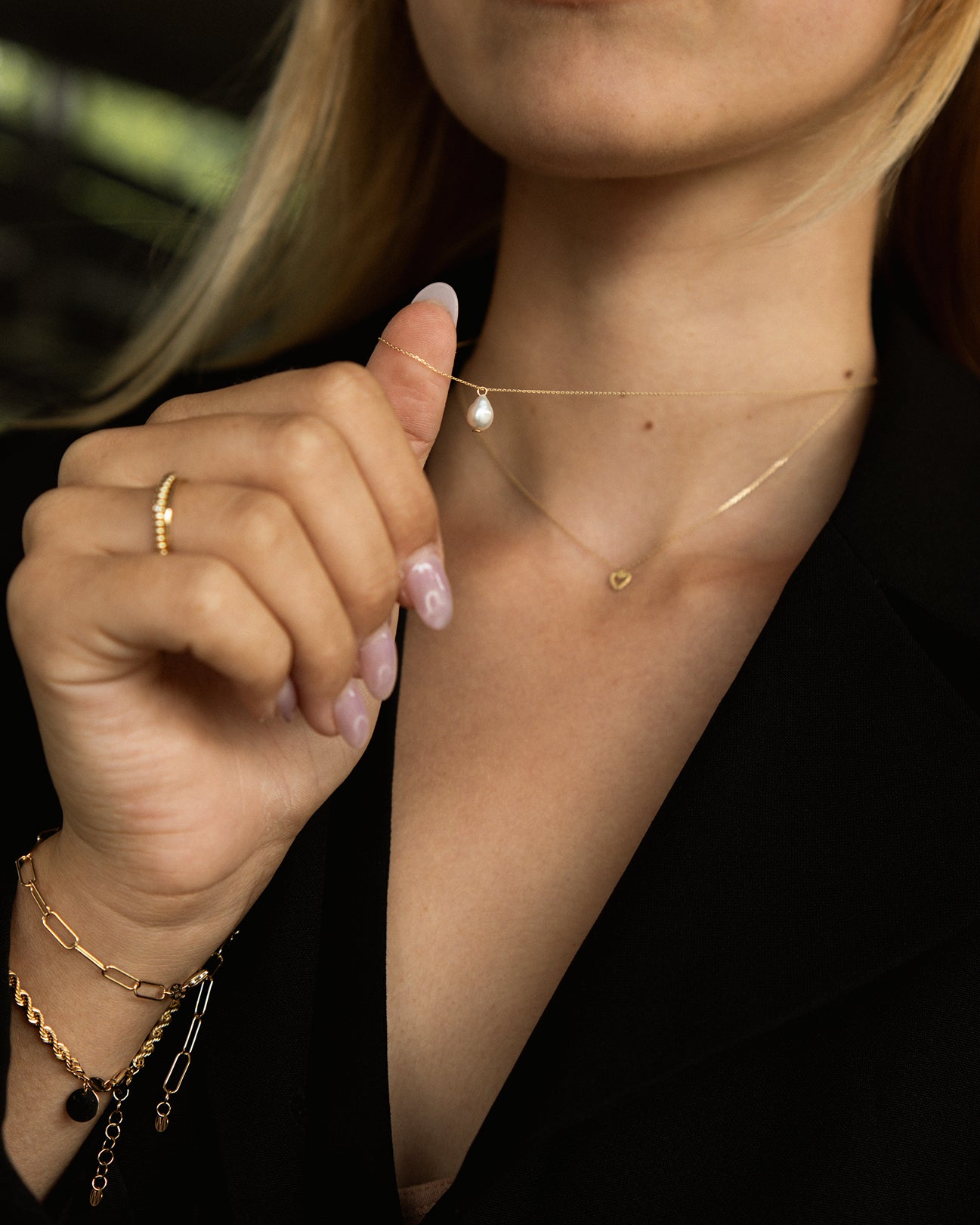
Demi-fine jewelry lives in the middle. It often uses materials such as sterling silver, gold vermeil, gold-filled metal, lab-grown diamonds, and semi-precious stones. It is usually more accessible than traditional fine jewelry, but more considered than disposable fashion jewelry.
That middle space is exactly why it has become so relevant. Modern customers do not always want to choose between very expensive fine jewelry and low-quality costume jewelry. Many want pieces that feel elevated, wearable, and better made, without needing every purchase to be a major investment.
That is where demi-fine jewelry makes sense.
Is demi-fine jewelry a legal term?
No, demi-fine jewelry is not usually a legal material definition.
This matters because brands can use the phrase in different ways. One brand may use “demi-fine” to describe gold vermeil over sterling silver. Another may use it for sterling silver. Another may use it for gold-plated brass with better branding.
That is why the term itself is not enough. You should always look beyond the label and check the actual material:
- Is it solid gold?
- Is it sterling silver?
- Is it gold vermeil?
- Is the micron thickness disclosed?
- Is it gold plated brass?
- Is the gold thickness disclosed?
- Are the stones natural, lab-grown, or simulated?
- Is the base metal named clearly?
A good brand should not rely on the words “demi-fine” alone. It should explain exactly what the piece is made from.
At Muse of My Own, this is especially important because we work across three material categories: solid gold, 3 micron gold vermeil, and sterling silver. Each one has a different purpose. Each one should be described clearly.
The category may be demi-fine. The materials should never be vague.
Fine jewelry vs demi-fine jewelry
Fine jewelry is usually the most durable and valuable category because it is made with precious metals throughout.
Our selection of solid gold is a good example. A solid gold piece is gold alloy all the way through. There is no outer gold layer that can wear away. It can still scratch, dent, or need polishing, but the material itself is consistent throughout the piece. That is one reason solid gold remains such a strong choice for everyday staples. It is not just gold on the surface. The gold is part of the metal itself.
Demi-fine jewelry may still use precious materials, but it often combines them in more accessible ways. For example, gold vermeil uses real gold over sterling silver. Sterling silver is itself a precious metal, but it is less expensive than gold. Lab-grown diamonds can offer the same chemical composition as mined diamonds, depending on the stone, but often at a more accessible price point.
The difference is not that fine jewelry is “good” and demi-fine jewelry is “bad.” The difference is purpose, price, and construction. Fine jewelry is often best for pieces you want to wear for many years with minimal compromise. Demi-fine jewelry is often best when you want better materials than fashion jewelry, but do not need every piece to be solid gold or platinum.
Demi-fine jewelry vs fashion jewelry
Fashion jewelry is usually designed around appearance and price first.
It can be beautiful, playful, and trend-led. There is nothing wrong with that when the product is honest about what it is. The issue begins when low-cost materials are dressed up with luxury language and sold as if they will behave like precious jewelry.
Fashion jewelry often uses base metals such as brass, zinc alloy, or stainless steel, sometimes finished with a thin coating of gold colour or plating. These pieces can be affordable and visually appealing, but the material value and long-term wear are different from sterling silver, gold vermeil, or solid gold.
Demi-fine jewelry should sit above that. It should use more considered materials. It should name them clearly. It should explain the base metal. It should disclose gold thickness when relevant. It should help the customer understand how the piece will age.
That transparency is what separates real demi-fine jewelry from fashion jewelry with nicer packaging.
Where solid gold fits
Solid gold sits closest to traditional fine jewelry.
It is the strongest choice for pieces you want to wear often and keep long term. This is especially true for rings, daily necklaces, heirloom pieces, and jewelry you do not want to remove constantly. Because solid gold is gold alloy throughout the piece, there is no surface layer that can wear away. The piece can still show scratches or signs of life, but it remains gold throughout. Solid gold serves a specific purpose: the long-term, everyday, “I want this to last” category.
If you are choosing a ring you want to wear every day, solid gold is usually the better choice than gold vermeil. If you are choosing a necklace you never want to take off, solid gold may be the more practical long-term decision. Solid gold costs more because the material itself costs more. But for certain pieces, that cost can make sense.
Where gold vermeil fits
Gold vermeil is one of the most important materials in demi-fine jewelry.
It gives you real gold over sterling silver, which makes it materially different from many forms of standard gold-plated jewelry.
In some legal systems, vermeil is described as a product with a sterling silver base coated or plated with gold, or a gold alloy of at least 10 karats, with a minimum thickness equivalent to 2.5 microns of fine gold across all significant surfaces. That definition matters because it gives the term “vermeil” substance. Proper gold vermeil is not gold-coloured brass. It is not a mystery base metal under a thin flash of gold. It is gold over sterling silver.
Muse of My Own chose 3 micron gold vermeil, going beyond the common 2.5 micron baseline. That does not make the piece behave like solid gold, and it does not mean the gold layer will last forever. But it does mean the gold layer is thicker than the baseline threshold used to define vermeil in many countries.
Gold vermeil fits beautifully in the demi-fine category because it offers a more accessible way to wear real gold over a precious metal base. It is especially useful for earrings, pendants, some bracelets, and designs where solid gold may not be necessary for every customer or every occasion.
Where sterling silver fits
Sterling silver is one of the clearest and most important materials in demi-fine jewelry.
It is a precious metal, not a base metal. It has intrinsic material value and has been used in jewelry for centuries. It is also more accessible than gold, which makes it ideal for customers who want better materials without choosing gold for every piece.
The words “silver,” “sterling,” and “sterling silver” describe products that contain 92.5 percent pure silver. Silver products are often marked 925, meaning 925 parts per thousand are pure silver.
That is why sterling silver is not the same as silver-coloured fashion jewelry. It is a real precious-metal category. Sterling silver does tarnish over time. That is part of its nature. Tarnish does not mean the piece is fake or poor quality. Silver reacts with sulfur compounds in the environment, which can create a darker surface layer. But sterling silver can often be cleaned, maintained, and worn for many years.
In demi-fine jewelry, sterling silver is a very strong material choice when you want a cooler-toned metal, a more accessible price point, and a piece that still has real material value.
What about brass?
Brass is commonly used in fashion jewelry because it is affordable, easy to shape, and can be plated to look like gold. Brass itself is an alloy of copper and zinc. It can be useful in many industries, but in jewelry, it is usually considered a lower-cost base metal compared with sterling silver or solid gold.
The issue with brass jewelry is not that it should never exist. The issue is that customers should know when they are buying it. Gold-plated brass may look beautiful when new, but the gold layer can wear over time. When that happens, the brass underneath may become visible or react with skin, moisture, and environment. Some people also associate brass or copper-containing jewelry with green marks on the skin, which can happen when copper compounds react with sweat, moisture, or other substances.
That does not mean every brass piece is bad. It means brass belongs in a different category from sterling silver, gold vermeil, and solid gold. If a brand sells gold-plated brass, it should say so clearly.
What about stainless steel?
Stainless steel is another common material in modern jewelry. It can be durable, affordable, and resistant to corrosion in many everyday conditions. It is often used for waterproof or low-maintenance jewelry, and some customers like it for that reason.
But stainless steel is not a precious metal in the same way sterling silver or gold is. It does not sit in the same material category. That is the key difference. Stainless steel jewelry can be practical, especially for customers who prioritize durability and price. But if someone is looking for precious-metal jewelry, sterling silver, gold vermeil, and solid gold offer a different kind of value.
This is why “better” depends on what you care about.
- If you want low-maintenance affordability, stainless steel may make sense.
- If you want precious metals, sterling silver or gold vermeil make more sense.
- If you want long-term gold jewelry, solid gold is the strongest option.
Demi-fine jewelry is not only about durability. It is about material quality, value, wearability, and transparency.
What materials should demi-fine jewelry use?
There is no single universal rule, but in a strong demi-fine collection, you would expect to see better materials than ordinary fashion jewelry.
That may include:
- solid gold, especially lower-karat everyday gold
- sterling silver
- gold vermeil
- gold-filled materials
- lab-grown diamonds
- natural gemstones
- high-quality semi-precious stones
The important thing is not the label. It is the disclosure. A piece described as demi-fine should not leave you guessing.
If it is gold vermeil, the brand should say the base metal and gold thickness. If it is sterling silver, the brand should say 925 sterling silver. If it is solid gold, the brand should say the karat. If it uses stones, the brand should clarify whether they are natural, lab-grown, or simulated. If it is plated over brass, the brand should say so.
Good demi-fine jewelry is not vague. It earns trust through clarity.
Is demi-fine jewelry worth it?
It is worth it when it offers a real upgrade from fashion jewelry: better base metals, real precious-metal content, better construction, and clearer disclosure. It is not worth it when the term is used as a shortcut for branding.
A gold vermeil piece with a sterling silver base and disclosed gold thickness is very different from gold-plated brass described vaguely as “premium.” A sterling silver piece is different from silver-tone alloy. A solid gold piece is different from gold-coloured stainless steel.
The customer should be able to understand the difference before buying. That is what makes demi-fine jewelry a useful category. It gives people access to better everyday jewelry without requiring every piece to be traditional fine jewelry. But it only works when brands are honest.
How to choose demi-fine jewelry well
Start with the material. Before looking at the styling language, check what the piece is actually made from.
If it says gold, is it solid gold, gold vermeil, gold-filled, or gold plated?
If it says silver, is it sterling silver or silver-tone?
If it says vermeil, does it disclose sterling silver underneath and gold thickness?
If it says waterproof, what is the base metal?
If it says hypoallergenic, what material claim supports that?
Then think about how you will wear it.
For a ring you want to wear constantly, solid gold is usually the better long-term choice.
For earrings, gold vermeil can be an excellent option because earrings usually experience less friction.
For silver-tone jewelry with precious-metal value, sterling silver makes sense.
For trend-led pieces, demi-fine materials can offer a better alternative to disposable fashion jewelry.
The best choice depends on the piece, not just the category.
Why Muse of My Own works across solid gold, gold vermeil, and sterling silver
Muse of My Own started with solid gold because solid gold is the strongest material for long-term everyday jewelry. That has not changed. But a thoughtful jewelry wardrobe does not have to be made from one material only. Some pieces deserve to be solid gold. Some make perfect sense in gold vermeil. Some are beautiful in sterling silver.
By working across these three categories, Muse of My Own can offer more choice without abandoning material integrity.
- Solid gold is for long-term staples.
- 3 micron gold vermeil is for accessible gold over sterling silver.
- Sterling silver is for precious-metal jewelry in its own tone, with its own character and value.
The goal is not to make every material sound the same. The goal is to explain the difference clearly, so customers can choose what makes sense for them. That is what modern demi-fine jewelry should do.
FAQs
What does demi-fine jewelry mean?
Demi-fine jewelry usually refers to jewelry that sits between traditional fine jewelry and fashion jewelry. It often uses materials such as sterling silver, gold vermeil, gold-filled metals, lower-karat solid gold, lab-grown diamonds, or semi-precious stones.
Is demi-fine jewelry real jewelry?
Yes, demi-fine jewelry can be real jewelry when it uses genuine materials such as sterling silver, gold vermeil, or solid gold. However, the term itself is broad, so it is important to check the actual material description.
Is demi-fine jewelry the same as fine jewelry?
No. Fine jewelry is traditionally made from precious metals such as solid gold or platinum and valuable gemstones. Demi-fine jewelry is usually more accessible and may use materials such as sterling silver, gold vermeil, or lab-grown stones.
Is gold vermeil demi-fine jewelry?
Yes, gold vermeil is commonly considered part of the demi-fine category because it uses real gold over sterling silver. Under the US vermeil standard, it requires a sterling silver base and a defined gold thickness.
Is sterling silver demi-fine jewelry?
Sterling silver is often used in demi-fine jewelry. It is a precious metal alloy containing 92.5 percent pure silver, often marked 925.
Is demi-fine jewelry better than fashion jewelry?
It can be, if the materials are better. Demi-fine jewelry usually uses more valuable materials than fashion jewelry, such as sterling silver or gold vermeil. But the term alone is not enough. Always check the actual material.
Is demi-fine jewelry worth buying?
Demi-fine jewelry is worth buying when the materials, construction, and price make sense. It is especially useful if you want better everyday jewelry than fashion jewelry, but do not need every piece to be traditional fine jewelry.
What is the best material for demi-fine jewelry?
There is no single best material. Solid gold is best for long-term daily staples. Gold vermeil is a strong choice for accessible gold over sterling silver. Sterling silver is a beautiful precious-metal option in its own right.